Robotics & Physical AI
Robotic Vision and Digital Twins
R03 · Specialist
Entry requirements
R02 and M02
What 48 hours means
- Lessons
- 36 h
- Capstone
- 8 h
- Assessment
- 2 h
- Remediation
- 2 h
Syllabus
Four modules, twelve lessons. Every lesson states what it covers and the evidence you produce for it.
Module 1
Perception and geometry
Digital twin scope · Camera geometry · Camera calibration
R03Show lessonsHide lessons
R03.01 · 180 min
Digital twin scope
Define which physical properties a simulation represents and omits.
Evidence: A fidelity statement prevents unsupported real-world claims.
R03.02 · 180 min
Camera geometry
Relate pixels, camera coordinates and robot frames.
Evidence: A worked projection matches supplied calibration fixtures.
R03.03 · 180 min
Camera calibration
Module 2
Manipulation
Perception pipeline · Depth and pose · Manipulation planning
R03Show lessonsHide lessons
R03.04 · 180 min
Perception pipeline
Connect object detections to robot-frame estimates.
Evidence:
Module 3
Twin fidelity
Collision and safety checks · Closed-loop behaviour · Domain variation
R03Show lessonsHide lessons
R03.07 · 180 min
Collision and safety checks
Test collisions, missing detections and uncertain poses.
Evidence:
Module 4
Deployment review
Sim to real validation plan · Performance and traceability · Engineering review
R03Show lessonsHide lessons
R03.10 · 180 min
Sim to real validation plan
Define staged bench tests and supervision requirements.

Capstone
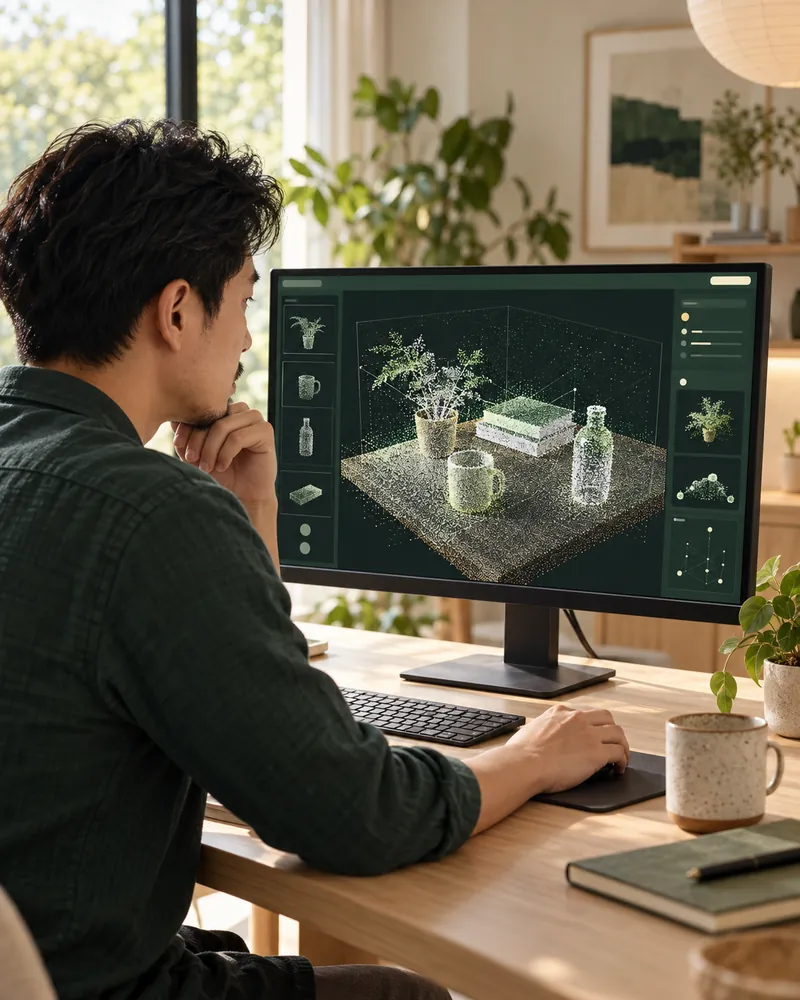
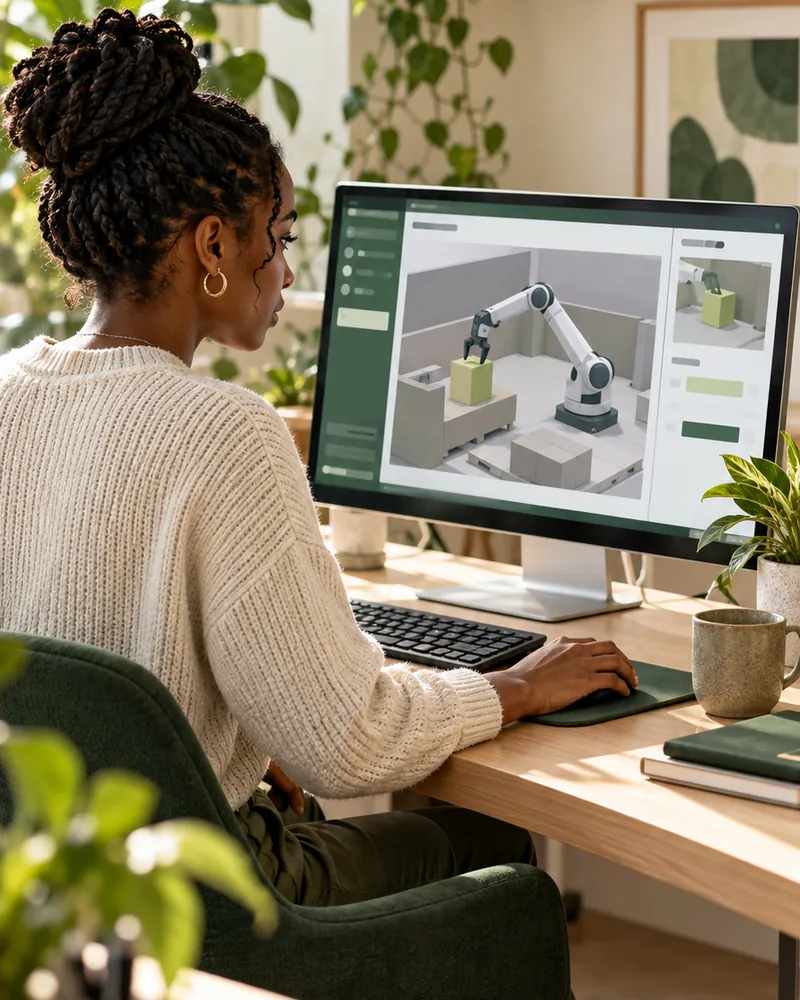
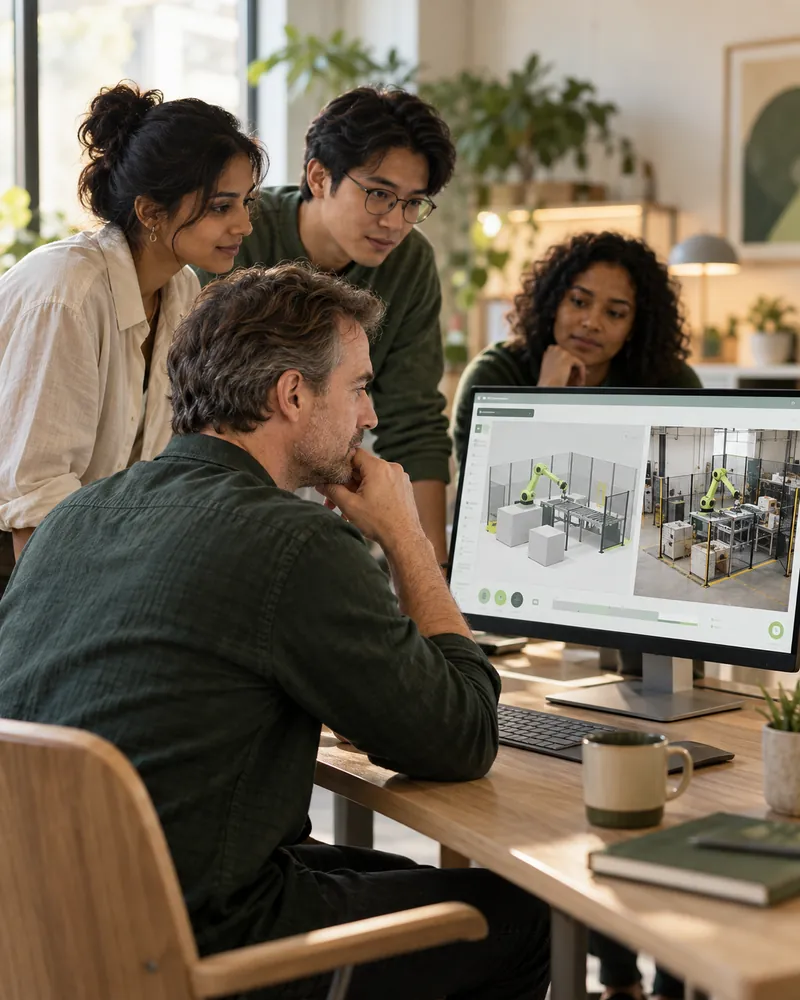
Build a simulated visual inspection or pick-and-place cell with calibrated sensing, uncertainty checks and a comparison between simulated and real-world assumptions.
Lab environment
GPU ROS desktop sandbox; supervised hardware optional
Lab infrastructure is not yet provisioned, so this describes the environment the course is designed for rather than one you can launch today.